
+86 138 5268 5691 13852685691@163.com
Reply within 12h·24/7 Multilingual Sales
English English
Titanium Alloys

TC21

TC21 Damage-Tolerance Alpha-Beta Titanium AlloyTC21 is a Chinese high-strength, high-toughness α+β titanium alloy of nominal composition Ti-6Al-2Sn-2Zr-3Mo-1Cr-2Nb-Si. It is engineered for damage

Back to All Products Titanium Alloys

TC21

TC21 Damage-Tolerance Alpha-Beta Titanium AlloyTC21 is a Chinese high-strength, high-toughness α+β titanium alloy of nominal composition Ti-6Al-2Sn-2Zr-3Mo-1Cr-2Nb-Si. It is engineered for damage

  • Bars
  • Plates
  • Tubes
  • Forgings
  • Wires
  • strips
  • Special Shapes

TC21 Damage-Tolerance Alpha-Beta Titanium Alloy

TC21 is a Chinese high-strength, high-toughness α+β titanium alloy of nominal composition Ti-6Al-2Sn-2Zr-3Mo-1Cr-2Nb-Si. It is engineered for damage tolerance — high strength (≥ 1100 MPa) combined with high fracture toughness (KIC 70–90 MPa·m1/2) and low crack growth rate — and is used for critical load-bearing airframe and engine components.

Overview

  • Material: TC21 — Ti-6Al-2Sn-2Zr-3Mo-1Cr-2Nb-Si damage-tolerance titanium
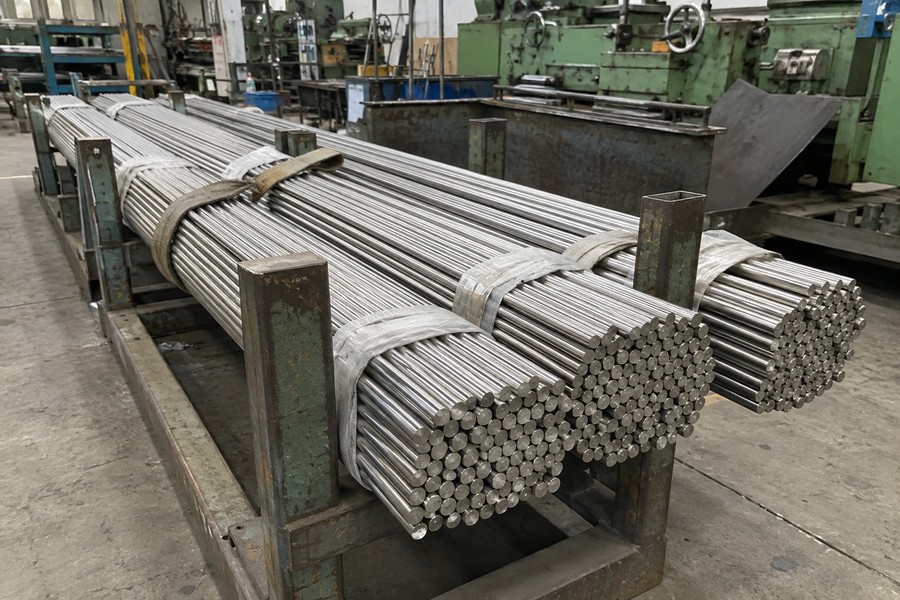
  • Available forms: Bar, plate, forgings and custom profiles

Chemical Composition (wt%)

ElementTiAlSnZrMoCrNbSiFeCNHO
Content Bal.5.5–6.51.5–2.51.5–2.52.5–3.50.8–1.51.5–2.50.10–0.25≤ 0.30≤ 0.10≤ 0.05≤ 0.015≤ 0.15

Other elements: each ≤ 0.10 %, total ≤ 0.40 %.

Physical Properties

PropertyTypical Value
Densityapprox. 4.52 g/cm³
Melting rangeapprox. 1600–1650 °C
Thermal conductivityapprox. 7–9 W/m·K
Coefficient of thermal expansion (20–100 °C)approx. 8.6 ×10⁻⁶ /°C
Modulus of elasticityapprox. 110–120 GPa
α/β transus950 ± 5 °C

Mechanical Properties (heat treated)

PropertyTypical Value
Tensile strength≥ 1100 MPa
Yield strength≥ 1000 MPa
Elongation≥ 10 %
Reduction of area≥ 25 %
Fracture toughness KIC70–90 MPa·m1/2

Low crack growth rate; retains good properties at 400 °C with good elevated-temperature strength and creep resistance.

Key Features

  • High strength (≥ 1100 MPa) with good toughness;
  • High damage tolerance and low crack growth rate;
  • Well-balanced strength, ductility, toughness and crack growth;
  • Good hot strength for long-term service below 400 °C;
  • Good corrosion resistance and weldability.

Fabrication & Heat Treatment

  • Melting: vacuum arc remelting (VAR) for uniform composition and low impurities.
  • Hot working: forged, rolled or extruded at 850–1050 °C; β-forging or α+β-forging routes possible.
  • Cold working: cold rolled and cold drawn with intermediate annealing at approx. 650–750 °C.
  • Welding: TIG, electron-beam and inertia friction welding after thorough cleaning and suitable shielding.
  • Machining: carbide tools with controlled speed, feed and depth due to high hardness and strength.
  • Annealing: 700–800 °C for 1–2 h, air cool.
  • Solution treatment & ageing: solution treat at 880–950 °C then rapid cool; age at 500–600 °C to raise strength. Adjusting solution / ageing parameters tunes the microstructure and properties.

Typical Applications

  • Aerospace: wing-joint structures, fuselage-to-landing-gear attachment frames, pylon-engine joints, engine shafts and frames;
  • Shipbuilding: high-strength structures and propulsion-system components;
  • Energy: high-pressure vessels, piping and towers in petrochemical service; reactor components in nuclear industry.

For detailed datasheets, mill certificates (EN 10204 3.1) or inquiries on specific sizes and tolerances, please contact our sales & engineering team.
WhatsApp Chat WeChat Skype Email Us Alibaba Store
Call Get Quote
English English